Resumption of 2012 dialogue ‘a positive signal’
China and Japan resumed talks on Monday in Tokyo on establishing a maritime crisis management mechanism to prevent the outbreak of conflict in the East China Sea, with analysts saying that the meeting is an encouraging signal, but warning that disagreements over key principles remain.
The working-level talks discussed setting up a hotline between the two sides, the first resumption of discussions since September 2012, when Japan announced its decision to "nationalize" the Diaoyu Islands.
At the time, Chinese and Japanese defense authorities had agreed in principle to use a common radio frequency for the two countries' ships and planes around the Diaoyu Islands. But further talks were suspended when relations soured in 2012.
Liu Jiangyong, vice director of the Modern International Relations Institute at Tsinghua University, told the Global Times even though the talks around the hotline are low-level, the meetings are a new attempt to solve conflicts in the spirit of the newly reached four-point agreement, and are therefore potentially significant.
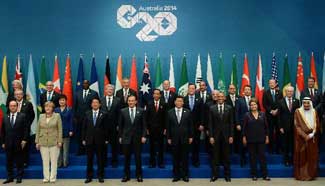
During the APEC summit held in Beijing in November, 2014, Chinese President Xi Jinping met Japanese Prime Minister Shinzo Abe in the first face-to-face encounter since both leaders came to power.
China and Japan later reached a four-point agreement to improve bilateral ties, agreeing to resume political, diplomatic and security dialogue while acknowledging different positions on the Diaoyu Islands.
During high-level consultations on maritime affairs held in Qingdao, China, last September, the two sides further agreed in principle to resume maritime liaison between their defense agencies.
"The jobs of communicating and drafting papers are done at lower levels. In the future there might be similar dialogues at other levels based on [these meetings]," Liu said.
Liu called the talks a good starting point, saying that the next steps might see the involvement of other government organs with stakes in maritime issues, such as fishery or agriculture. But he emphasized that the issue is too complicated to be solved in one step.
A source asking to remain anonymous told the Global Times on Monday that both China and Japan are concentrating their naval and air power in the waters around the Diaoyu Islands. The Chinese navy and air force are running regular combat patrols, while warships from the Japan Maritime Self-Defense Force are keeping close watch on the Chinese side, increasing the chance of accidental conflict.
In a commentary released Monday, the Xinhua News Agency said the meeting between defense officials this week is an encouraging sign but warned that Japan should abide by its agreement with China and refrain from further provocation.
Even though talks lapsed for more than two years, the two countries are not without the tools to prevent conflict, said Geng Xin, a research fellow with the Chongyang Institute for Financial Studies at the Renmin University of China.
"[Even during the past two years], both China and Japan had a tacit understanding that they should actively control the situation and prevent Sino-Japanese relations from getting out of hand," he said, citing Japan prohibiting Okinawan fishermen from fishing around the Diaoyu Islands as an example.
Geng believes the talks should be seen as a sign of an improving Sino-Japanese relationship, but "it doesn't mean the ice is completely thawed."
"In fact, the two countries still have disagreements concerning key principles, such as Japan's reluctance to face its war-time history," he noted.
Top Japanese government spokesperson Yoshihide Suga said Saturday that Abe is mulling changing the wording on wartime aggression in the 1995 Murayama Statement in a new statement to be issued on the 70th anniversary of the end of World War II.
The 1995 statement issued by Japan's then prime minister Tomiichi Murayama offered apologies for Japan's wartime aggression in Asia.
On January 9, the Japanese government commented that the country's constitution does not prohibit officials visiting the Yasukuni Shrine to mourn those killed during the war.
In response, Chinese foreign ministry spokesperson Hong Lei said on Monday that China-Japan relations can move forward in a sound and stable manner only if Japan looks squarely at and deeply reflects upon its history of aggression and makes a clean break with militarism.
But Geng said even though disagreement exists, the two sides have reached a consensus that their common interests far outweigh their disagreements, and should not harm the stability of their relationship.
"The four-point agreement marks the largest development in Sino-Japanese relationship in the last couple of years," he said.


 |
|