by H. L. Bentley
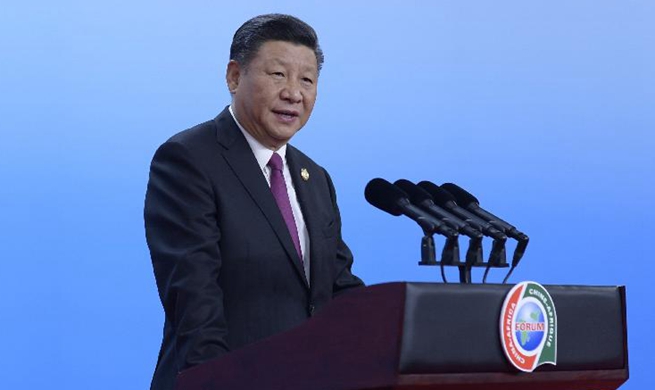
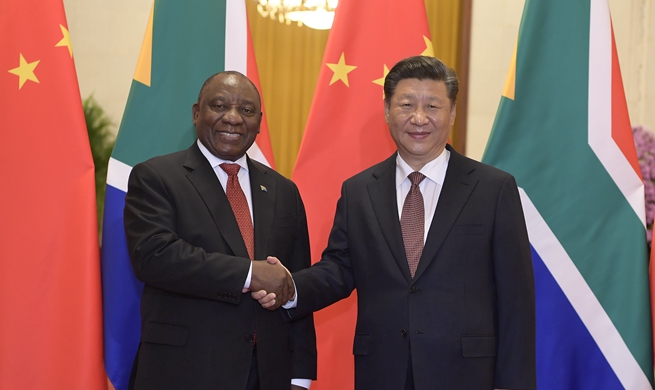
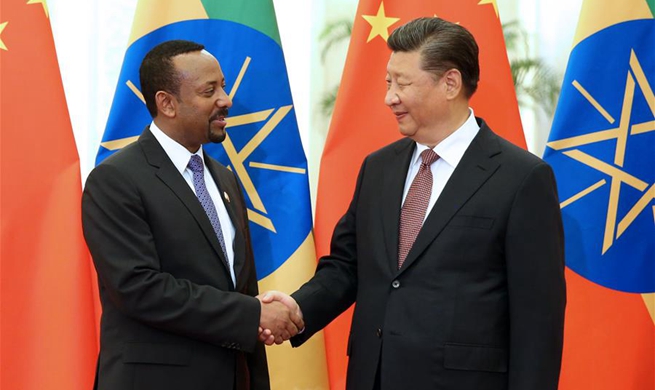
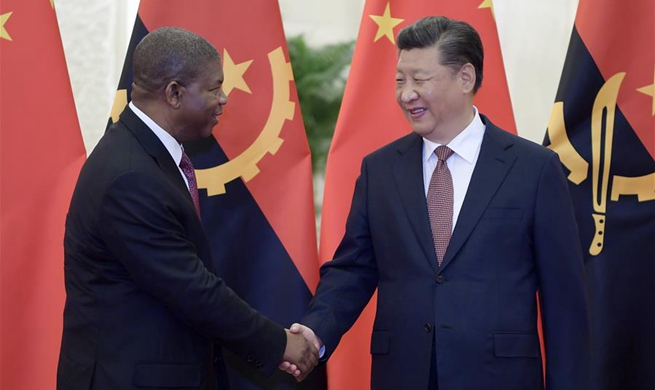
BEIJING, Sept. 3 (Xinhua) -- Chinese President Xi Jinping and leaders from across the African continent gathered in Beijing for a two-day summit of the Forum on China-Africa Cooperation.
Depending on where you are now, this forum might not change your life, but -- with a combined population of over 2.6 billion -- even if it affects a fraction of the people who call either of the two regions home, there are a lot of lives to be touched.
Africa has three development bottlenecks -- lack of infrastructure, skilled workforce and funding. There are more developing countries in the African Union than any other multilateral grouping in the world.
Since China embarked on reform and opening-up 40 years ago, great things have been achieved, with some going so far as to be called "a miracle." The accomplishments of the past four decades, however, were less to do with divine intervention than pure grit and determination.
In the process of releasing the creativity and vitality of its people, China has learned monumental lessons, many the hard way.
It is for this reason that today, China, the world's largest developing nation, is working with other developing nations, so that they can pursue modernization with a full arsenal of tools to avoid the negative side effects that have accompanied rapid industrialization in the past.
The China-Africa forum, therefore, is not just about the "three bottlenecks." There is one issue that many nations, regardless of their geographic location, must all address: how can the international community limit, and where possible fix, the damage we have done to our planet?
In a recent interview with Xinhua, Erik Solheim, the Executive Director of the United Nations Environment Programme (UNEP), said he hoped the meeting would result in "win-win solutions where Africa can learn from Chinese experience on fast development and also how China is turning around to be an environment-friendly country."
This poignant fact was also underscored by the President of Rwanda Paul Kagame in another recent interview with Xinhua.
"The distance between China and Africa doesn't matter [...] at the end of the day we are all driven by the same aspirations. We want development. We want stability. We want to make sure the environment we are in is taken care of," he said.
Closeness is about more than distance, and shared values and aspirations make us stronger.
The members of FOCAC are united by being beneficiaries of two over-arching programs -- on the one hand is China's Belt and Road Initiative, which aims to achieve common development through improved infrastructure and connectivity.
On the other hand is the African Union's Agenda 2063, a strategic framework for the socio-economic transformation of the continent.
This year's summit is not just about the China-Africa community with a shared future. Increased China-Africa cooperation has worldwide implications.
By the end of 2017, China had invested 100 billion U.S. dollars in Africa. Projects include the Nairobi-Mombasa standard gauge railway in Kenya and the Ethiopia-Djibouti railway. In fact, the railways and highways that have been built across Africa by Chinese firms are long enough, if connected, to stretch from China to Rwanda.
Cooperation is not just about concrete and glass. There is also the question of how to bring the peoples of different cultures closer together. This can be achieved through knowledge sharing and cultural exposure. To this end, more than 160,000 people from Africa have received training under China-Africa programs since the Johannesburg summit in 2015, and over 200 schools had been built by the end of 2015. There are now 54 Confucius Institutes in 41 African countries since the first one in Africa opened in Nairobi in 2006.
In Tanzania, the University of Dar es Salaam's China Culture Center is celebrated for the work it does to support cultural exchanges. It achieves this through events that promote China, and showcase the opportunities available -- from martial arts, Mandarin classes, to demonstrations on Chinese tea ceremonies. Today, Chinese culture is celebrated not only through a love for language, but also through traditions and kinship.
Promises and proposals, however, need funding. Here, too, China has offered a hand.
The China-Africa Development Fund was set up in 2007 following the 2006 FOCAC Beijing summit. It has, so far, decided to invest more than 4.6 billion dollars in over 90 projects in 36 African countries. It is estimated that more than 8.7 million people on the African continent will benefit from investment channelled through these projects.
China will extend a total of 60 billion dollars of financing to Africa, President Xi announced Monday at the opening ceremony of the FOCAC Beijing summit. The financing will be provided in the form of government assistance as well as investment and financing by financial institutions and companies.
The summit has the potential to make real differences to topics -- growth, welfare, environment -- that have prominence outside the FOCAC member states. China has already entered into a new stage of social and economic development. Is Africa, too, ready to embark on a similar path?